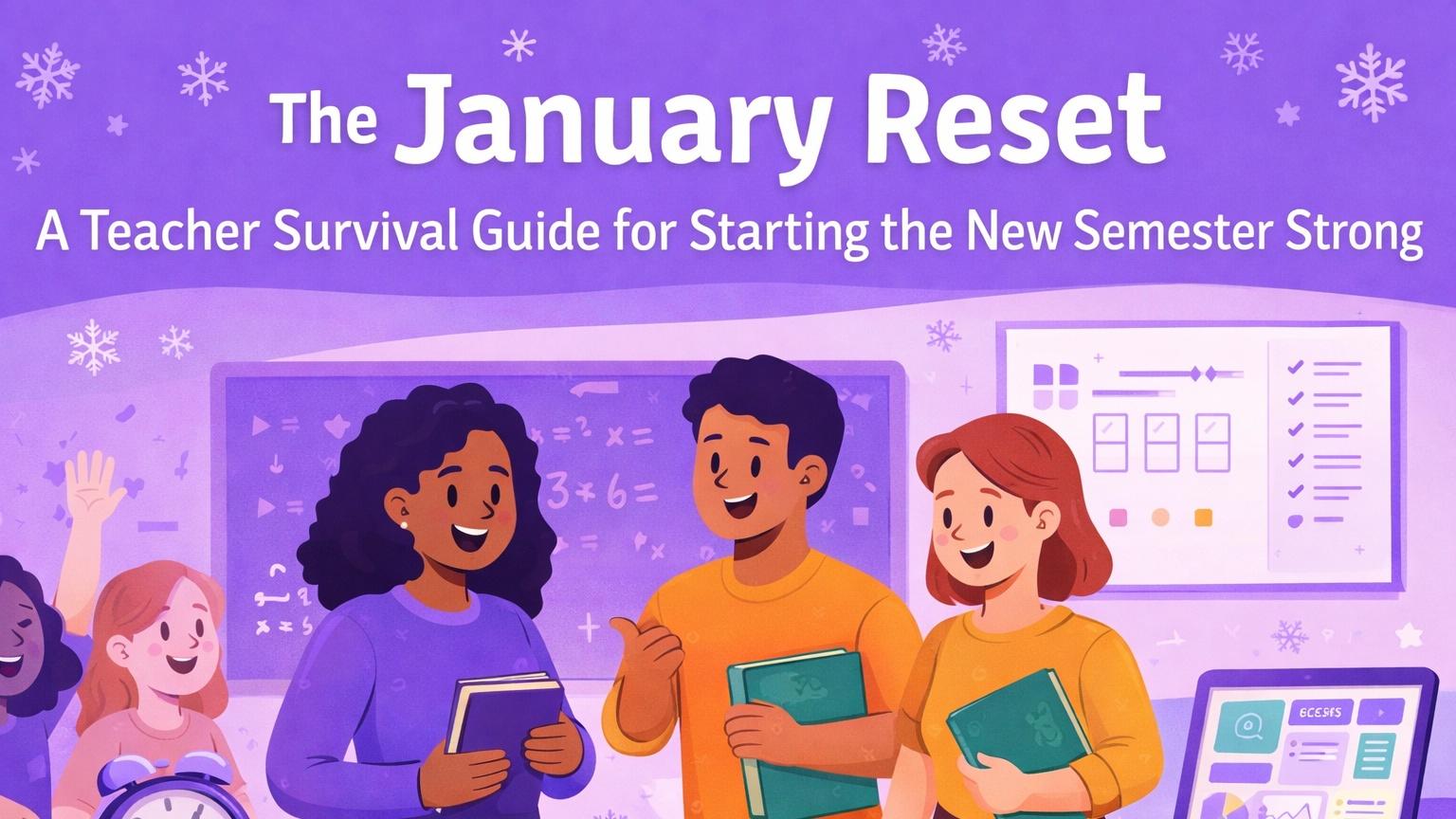
Coming back from winter break can feel abrupt—for you and your students. For many teachers, January is one of the hardest months of the school year, especially when it comes to classroom management, pacing instruction, and avoiding burnout after winter break. Routines are rusty, attention spans are short, and expectations feel fuzzy.
January doesn’t require a total reinvention—it requires intention.
Read on blog post on teacher burnout! It includes tips and tricks to overcome burnout!
Instead of doing everything at once, focus on a few intentional resets that will actually make the rest of the semester smoother. This January classroom reset is designed to help teachers restart routines, reset expectations, and start the second semester strong—without overwhelming themselves or their students.
Below are five focused survival areas, each with real-life do’s and don’ts and simple ways to use EasyClass AI to save time and reduce stress.
This guide is especially helpful for first-year teachers, teachers switching grade levels, or anyone feeling overwhelmed returning to the classroom after winter break.
1. Ease Back Into Instruction (Structure Over Speed)
January is not the time to overwhelm students—or yourself—with brand-new, heavy content. Students need structure and familiarity before rigor ramps back up.
Click here to learn tips and tricks to use on spiral reviews!
DO:
-
Use spiral review, test prep games, or skill refreshers
-
Stick to lesson formats students already know
-
Clearly model expectations for assignments again
DON’T:
-
Launch a brand-new unit on day one
-
Try an untested teaching strategy during the first week back
-
Assume students remember procedures from December
Real life: If you normally do interactive notebooks, start there again instead of introducing a brand-new system immediately.
EasyClass AI Tip: Use the Lesson Plan Generator or Spiral Review tools to quickly build review lessons using standards you already taught—no reinventing required.
2. Reset Expectations and Classroom Culture Together
Behavior issues in January usually aren’t defiance—they’re forgotten routines. Pair expectation resets with relationship-building so it doesn’t feel punitive.
Read here to learn more about classroom strategies that can help with behaviors!
DO:
-
Re-teach procedures explicitly (transitions, group work, noise levels)
-
Practice expectations instead of just reviewing them
-
Set class goals for the new semester
DON’T:
-
Say “you should already know this”
-
Jump straight to consequences without reteaching
-
Expect compliance before reconnection
Real life: If transitions are messy, stop, model it again, and practice—even if it feels repetitive. It saves time later.
EasyClass AI Tip: Use the Presentation Generator to create a quick expectations slideshow with visuals for procedures, routines, and behavior reminders.
3. Set Realistic Expectations for Yourself
A common January trap is trying to become a “new teacher” overnight. That mindset leads to burnout fast.
Read here to learn about tools that can help you achieve a better work-life balance!
DO:
-
Plan one week at a time
-
Reuse lessons that worked well in the fall
-
Choose ONE system to improve
DON’T:
-
Overhaul your entire classroom setup
-
Create brand-new materials for every lesson
-
Compare your January productivity to someone else’s highlight reel
Real life: If your fall small groups worked, keep them. You don’t need a new rotation system just because it’s January.
EasyClass AI Tip: Reuse and tweak past lessons with EasyClass instead of starting from scratch—small edits save serious time.
4. Refresh the Space Without Creating Extra Work
A physical reset can signal a fresh start—but it doesn’t need to be Pinterest-worthy.
Read out blog post on AI seating Charts and how they can help you in the classroom!
DO:
-
Rearrange seating or table groups
-
Update visual schedules or goal boards
-
Clear out clutter from the fall
DON’T:
-
Redecorate everything
-
Stay late cutting new posters
-
Spend your own money trying to “reset the vibe”
Real life: Simply changing desk arrangements can disrupt old behavior patterns and re-engage students.
EasyClass AI Tip: Update Seating Charts and Display Boards in minutes to reflect new layouts and expectations.
5. Protect Your Energy Early
How you pace yourself in January sets the tone for the entire semester.
Read here on how AI can help with work-life balance!
DO:
-
Leave at contract time when possible
-
Grade selectively, not obsessively
-
Build predictable routines that reduce decision fatigue
DON’T:
-
Volunteer for extra duties right away
-
Take work home every night the first week back
-
Feel guilty for choosing sustainability
Real life: Not every assignment needs detailed feedback. Some just need completion and a quick check.
EasyClass AI Tip: Use Quick Feedback tools or Report Card Comments to save time and protect your evenings.
Quick January Reset Checklist (Save This)
-
Re-teach classroom expectations and routines
-
Keep lessons familiar and structured
-
Plan one week at a time
-
Refresh seating or visuals
-
Protect your time and energy
Final Thought
If January feels harder than August, you’re not doing anything wrong—this is one of the most demanding points in the school year. A strong January isn’t about doing more; it’s about doing what matters most. When expectations are clear, routines are predictable, and energy is protected, the rest of the semester feels far more manageable.
Ready to Make January Easier?
If planning, reteaching expectations, or staying organized after break feels overwhelming, EasyClass AI can help you reset without starting from scratch. From generating expectation presentations to spiral review lessons, seating charts, and quick feedback tools, EasyClass is built to take repetitive tasks off your plate—so you can focus on teaching.
Try EasyClass AI free and start the semester strong—without burning out.