It’s Not You — It’s November
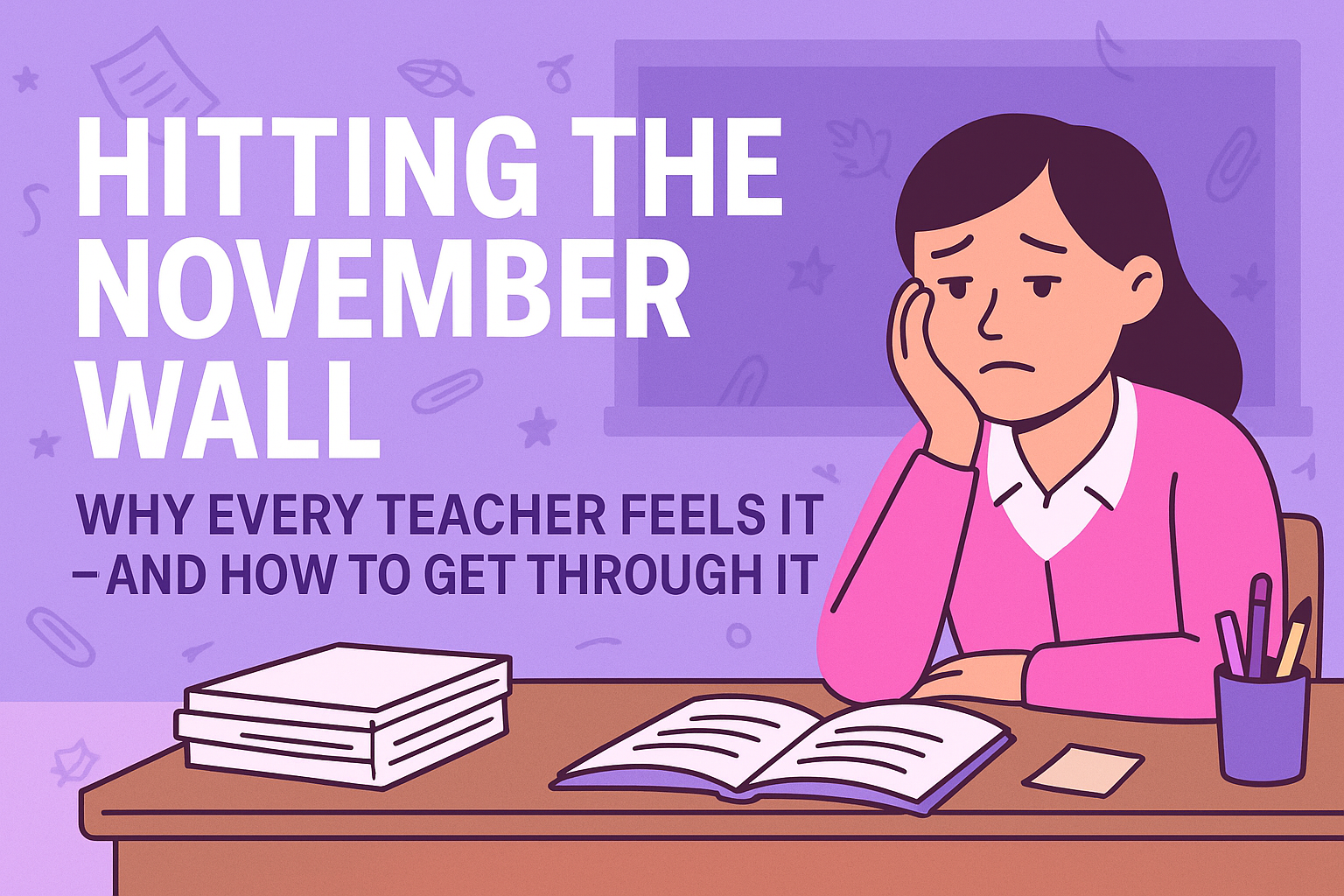
If you’re sitting at your desk staring at a stack of ungraded papers, wondering why everything feels heavier than usual… you’re not crazy. You’ve hit the November wall — that time of year when energy dips, behavior tanks, and the phrase “just make it to Thanksgiving break” becomes your daily mantra.
By now, the beginning-of-year excitement is long gone. The new seating chart didn’t fix the talking. The candy bribes have lost their magic.
And the coffee that used to power you through first period? Now it just keeps you upright — barely.
If you’re feeling tired, overwhelmed, or slightly unhinged — you’re in good company. Every teacher hits this wall, no matter how long they’ve been in the game.
Why the November Wall Is Real
Teachers don’t just imagine the November slump — it’s backed by data and decades of shared experience in breakrooms everywhere. The “honeymoon phase” of the school year ends right around October, and by November, reality sets in.
You’ve been managing 20–30+ personalities for months straight. You’ve adapted to changes, handled parent emails, survived at least one schoolwide event chaos (field day, picture day, or the Halloween sugar rush), and you haven’t had a true day off since Labor Day.
It’s the perfect storm: exhaustion meets shorter days, colder weather, and rising expectations.
1. Classroom Chaos Mode: When Behavior Tanks
By November, kids have figured out your patterns — and they’re testing limits again. That sweet “back-to-school” compliance? Gone.
They’re chatty, wiggly, and completely distracted by the approaching holidays. You’re redirecting more, repeating directions three times, and realizing your noise meter might just combust.
Real-life example:
Last year, my students could do a Do Now silently in August. By November, that same Do Now turned into a full-blown group project on who could sharpen their pencil the loudest.
You’re not imagining it — they’re tired too. They’re craving novelty, structure, and connection (even when they act like they don’t care).
Survival tips:
-
Switch up your routine: even one new element — stations, quick partner activities, brain breaks — can reset the tone.
-
Re-teach expectations: not as punishment, but as a reminder. Kids need a reset, just like we do.
-
Focus on consistency over creativity: Fancy ideas are great, but in November, simple and clear wins every time.
2. Grading, Deadlines, and Data Hell
November isn’t just emotionally draining — it’s administratively brutal. Many schools wrap up grading periods, progress reports, and mid-year evaluations around this time.
That means teachers are juggling lesson plans, data entry, parent conferences, and walkthroughs — all while trying not to drown in essays, math tests, and missing homework.
Real-life example:
You spend your planning period grading 28 essays. Just as you finish the last one, your admin emails: “Can you input your student goal data by 3 PM?” The spreadsheet doesn’t even open before dismissal.
Survival tips:
-
Prioritize grading during contract hours: Tackle one key assignment per planning block instead of trying to grade every subject at once — and give yourself permission to stop when time’s up.
-
Use tech to your advantage: auto-grade quizzes, voice-record feedback, or use templates for repetitive comments.
-
Be realistic: not everything needs to be graded. Kids need feedback — not perfection-level assessment on every single task.
3. Weather, Mood, and Motivation
The sun is setting before you even leave campus. You’re running on artificial lighting, lukewarm coffee, and the faint hope of Thanksgiving break.
Seasonal changes impact everyone — teachers included. The shorter days mess with our mood, the weather keeps kids inside during recess, and suddenly it feels like every day is either chaos or exhaustion.
Real-life example:
You finally plan a fun, hands-on activity… and then it rains. The kids can’t go outside, they’re restless, and someone inevitably tries to roll across the carpet during group work.
Survival tips:
-
Plan indoor movement: stretching, mini challenges, or “task walks” around the classroom.
-
Take micro-breaks for yourself: step outside during dismissal, turn off lights at lunch, or play calming music during transitions.
-
Don’t underestimate fresh air: even a two-minute reset can change your whole afternoon.
4. The Emotional Side: The Holiday Weight
The holidays aren’t lighthearted for every kid. November and December can bring up stress, grief, or instability for families — and teachers feel it.
You start noticing behavior shifts: the student who’s suddenly withdrawn, or the one acting out because of something happening at home. Teachers carry that weight quietly, even when we’re smiling through it.
Real-life example:
You notice one of your students hasn’t brought lunch all week. Another starts falling asleep in class. You make quiet phone calls, arrange support, and hold it all together — while balancing everything else.
Survival tips:
-
Remember: you’re not their whole world — but you are a bright spot in it.
-
Lean on your team: share what you’re seeing with counselors or admin. You don’t have to carry it alone.
-
Build joy intentionally: gratitude notes, small wins wall, or silly class traditions. Sometimes the best “lesson” you can give in November is reminding kids that school can still feel good.
5. Admin Pressure & Mid-Year Evaluations
November also marks the unofficial season of “walkthrough anxiety.” Admins start scheduling observations and collecting data, which adds another layer of stress.
You’re trying to teach fractions, manage behaviors, and then suddenly your principal pops in with a clipboard during your loudest transition.
Real-life example:
You’re mid-lesson on the American Revolution, trying to calm down three side conversations, when your evaluator walks in. Naturally, the Smartboard freezes and the one student who never raises their hand suddenly reenacts a musket battle.
Survival tips:
-
Don’t chase perfection: administrators know November isn’t Pinterest-perfect teaching season.
-
Keep your focus: solid relationships, clear expectations, and engagement matter more than flawless decor.
-
Use walkthroughs as feedback, not judgment: you’re growing too — and it’s okay to show that.
6. The November Parent Communication Spike
As grades finalize and progress reports go out, parents start emailing more — and some of those emails are not the “thank you” kind.
It’s a tricky balance: you want to support their child, but you also have boundaries.
Real-life example:
You get an email that starts with “I’m just confused why…” and you know it’s going to ruin your planning time. Or worse — it’s 9 PM, and your phone buzzes with a message from the parent portal.
Survival tips:
-
Set communication hours and auto-reply outside of them.
-
Use pre-written templates for common concerns (“missing work,” “behavior follow-up,” etc.).
-
Document everything: saves time, stress, and misunderstandings later.
7. Real Talk: How to Actually Survive November
Here’s the honest truth — you won’t make November easy, but you can make it survivable.
A few sanity-saving moves:
-
Simplify everything: lesson plans, routines, expectations — cut the fluff.
-
Plan something fun (for you, not just them): Spirit Week? Coffee Fridays? Tiny classroom contest? Anything that gives you something to look forward to.
-
Collaborate instead of isolate: swap ideas, vent during lunch, or co-plan with another teacher to save time.
-
Lower the guilt bar: your lessons don’t need to be “Pinterest-worthy” to be effective.
-
Prep for future-you: make copies ahead, organize next week’s materials, or schedule your sub plans early.
-
End each day with a win: write down one thing that went right — even if it’s “no one cried during math.”
8. Quick FAQs: You’re Not Alone
Q: Why do I feel so unmotivated right now?
Because you’ve been “on” for months without real rest. Teaching is emotional labor — it’s normal to feel drained by November. You’re not bad at your job. You’re human.
Q: How do I reset my classroom without feeling like I’m starting over?
Frame it as a “mid-year refresh.” Reteach expectations in a positive way, add one new classroom routine, and re-engage students with a fun challenge. Small tweaks can spark big change.
Q: What if I feel like quitting?
Take a breath. Don’t make big decisions in burnout season. November is rough, but it’s not forever. Get through to the next break — then reassess with a clear mind.
Q: How can I take care of myself when I have no time?
You don’t need hours — just small moments. Leave five minutes earlier. Say no to one extra task. Eat lunch sitting down. Rest isn’t earned — it’s necessary.
9. When You’re Ready to Make It Easier (The EasyClass Way)
Look, the work never stops — but the overwhelm doesn’t have to be constant. Tools like EasyClass AI were built by teachers who’ve been exactly where you are.
If November’s got you drowning in lesson plans, worksheets, or exit tickets, EasyClass can help lighten the load. With AI tools like:
-
Lesson Plan Generator — saves hours of planning time
-
Exit Ticket & Warm-Up Builders — instant engagement without the stress
-
Noise Meter & Reward Tracker — help keep your class accountable when energy dips
You don’t have to do it all alone. You just need smarter tools that understand how much teachers already juggle.
Take what you need, breathe, and remember: it’s not you — it’s November. And you’re doing better than you think.