Classroom management: the phrase that can strike fear (and maybe a little exhaustion) into even the most experienced teachers. You can plan the most engaging lesson in the world, but if your class won’t stop talking or can’t focus, learning stalls.
If you’ve ever found yourself Googling “How do I get my students to pay attention?”—you’re not alone. In fact, it’s one of the most searched teacher questions online. Teachers everywhere are looking for simple, effective strategies that don’t eat up more prep time or leave them feeling drained.
The good news? With the right mix of classic strategies and new tools designed for teachers, you can get back to teaching while keeping students on track.
Why Classroom Management Feels Harder Than Ever
Today’s classrooms are busier, louder, and more demanding than ever. Teachers juggle multiple learning needs, short attention spans, and constant disruptions. Even with great intentions, traditional management methods—like moving seats or raising your voice—don’t always cut it.
What teachers need are strategies that are clear, consistent, and easy to implement. Better yet, tools that take some of the stress off your shoulders and help keep students accountable.
Practical Classroom Management Strategies (That Work in Real Classrooms)
Here are some of the most effective ways teachers manage behavior and keep students focused—plus how you can make them even easier with the help of EasyClass AI.
1. Set Clear Expectations (and Let Tech Back You Up)
One of the most important steps in classroom management is setting the tone. Students need to know what’s expected—and that those expectations won’t shift from day to day.
Traditional strategies include:
-
Using call-backs (“Class, class!” → “Yes, yes!”)
-
Modeling behaviors before transitions
-
Practicing routines until they become habits
But let’s be honest—sometimes it feels like your students “forget” expectations as soon as you’ve said them. That’s where tech can step in.
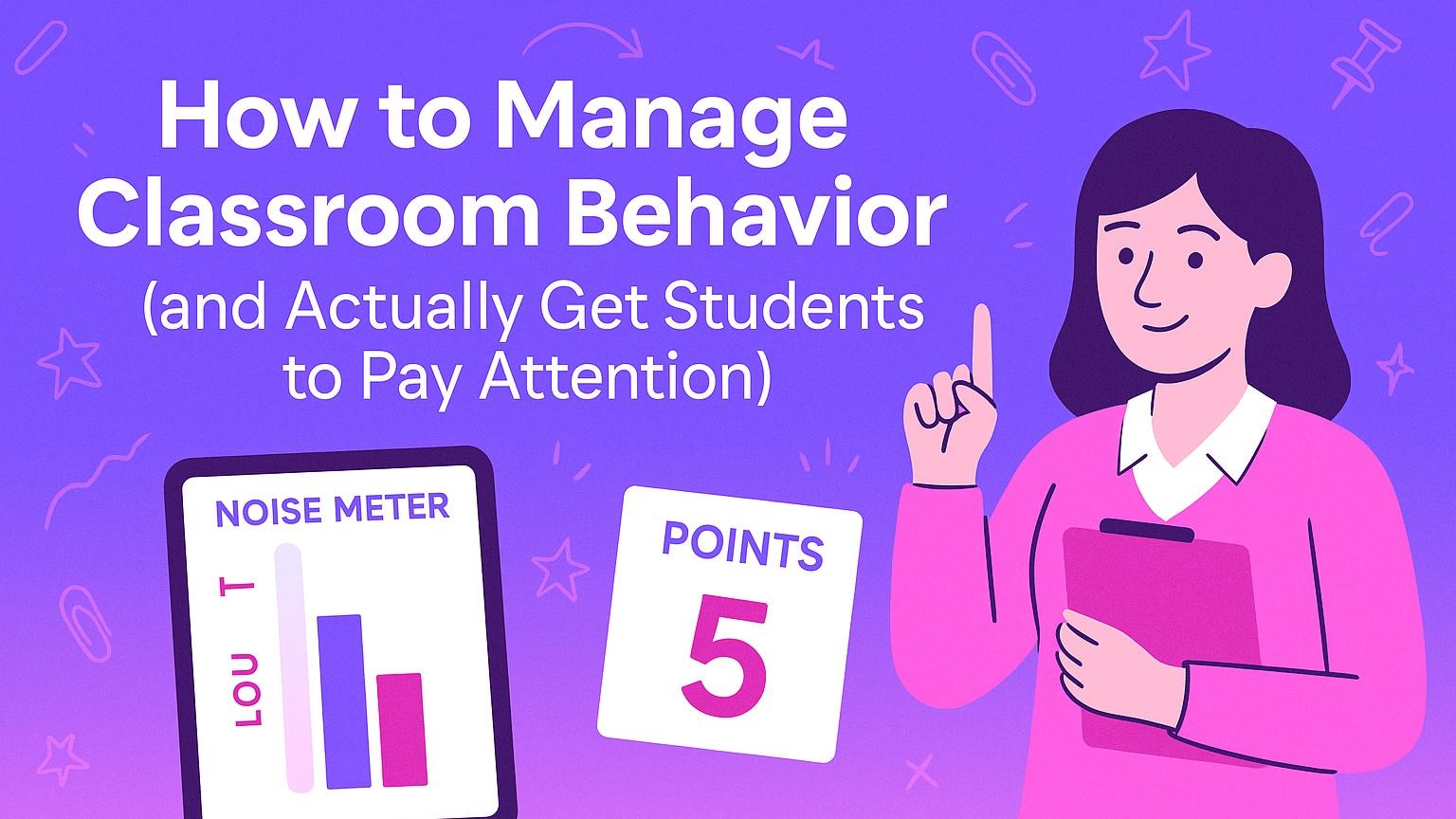
EasyClass AI Tool: Noise Meter
-
Project the Noise Meter on your board.
-
Set a “do not cross” bar at the volume you expect.
-
The meter tracks noise levels using your microphone.
-
Every time the bar is crossed, it keeps count.
Why it works: It makes noise levels visual and measurable, taking the pressure off you. Instead of constant reminders, students can see when they’re too loud—and they know the count is being tracked. This builds accountability without arguments.
2. Arrange Seating to Prevent Problems Before They Start
Every teacher knows that where students sit can make or break classroom management. If you place talkative best friends together, you’ll spend half the class redirecting. If you separate them, suddenly everyone gets more work done.
Traditionally, teachers spend hours sketching seating charts by hand—or rearranging desks on the fly when issues pop up.
EasyClass AI Tool: Seating Chart Maker
-
Tell the tool which students can’t sit together.
-
AI instantly generates a seating chart that honors your requests.
-
Update as needed with just a few clicks.
Why it works: You don’t waste time redrawing charts, and students can’t argue with “random” placements. It feels neutral, fair, and easy to explain: “The system made the chart.”
3. Use Positive Reinforcement That Students Care About
Students are more likely to follow expectations when they feel their positive behavior is noticed and rewarded.
Classic approaches include:
-
Behavior charts on the wall
-
Tickets or tokens
-
Praise and recognition
But these systems can be hard to keep up with consistently. That’s why teachers are moving toward digital point tracking.
EasyClass AI Tool: Points Widget (on Display Boards)
-
Add the widget to your board.
-
Award points to individuals, groups, or the whole class in real time.
-
Use it during review games, transitions, or just for meeting expectations.
Why it works: Students see progress instantly, and the public visibility motivates them. Instead of nagging, you’re highlighting what’s going well—and students rise to the occasion.
4. Get Personalized Help When You’re Stuck
Sometimes, no matter what you try, you hit a wall. A class that constantly blurts out. A group that refuses to transition quietly. Students who test limits every day.
Normally, you’d lean on a mentor teacher, colleague, or Pinterest board. But what if you had a virtual co-teacher available whenever you needed?
EasyClass AI Tool: Co-Teacher Assistant
-
Type in your classroom challenge.
-
Example: “My students won’t stop blurting out during lessons.”
-
The assistant gives tailored strategies, tips, and scripts to try.
Why it works: Instead of spending hours searching, you get instant feedback and ideas—like having a co-teacher you can always rely on.
Tried-and-True Teacher Strategies (That Pair Well with Tech)
Even with digital tools, classic methods are still powerful. Combine these with EasyClass AI, and you’ll feel more in control.
-
Call-backs: Use quick signals to get attention.
-
“Do It Again” strategy: If students don’t transition correctly, calmly make them repeat until they get it right.
-
Behavior charts: Still effective when consistent, especially paired with digital tracking for accountability.
Real-Life Classroom Example
Picture this:
-
You start class with the Noise Meter projected. Students know the volume expectation right away.
-
Your AI-generated seating chart ensures distractible pairs aren’t side by side.
-
As students participate, you add points on the board, fueling friendly competition.
-
During planning, you chat with the Co-Teacher Assistant about strategies for a group that struggles with transitions, and you walk in the next day with a new approach ready to go.
Suddenly, behavior management isn’t about constant correction—it’s about systems that run themselves.
Why Tools Like EasyClass AI Change the Game
Behavior management isn’t about perfection; it’s about consistency. Tools that track noise, manage seating, reward behavior, and provide advice mean you don’t have to do it all manually.
That means:
-
Less stress
-
More teaching time
-
A calmer classroom environment
And ultimately—that’s what every teacher wants.
Final Takeaway
Managing classroom behavior doesn’t have to be a daily battle. By blending tried-and-true strategies with AI-powered tools built for teachers, you can set clear expectations, keep students accountable, and free yourself to focus on what matters most: teaching.
If you’re ready to stop repeating yourself and start seeing results, try EasyClass AI’s classroom tools today.
SEO-Friendly FAQ Section
1. How do teachers manage noisy classrooms?
Teachers use strategies like call-backs, behavior charts, and visual tools like noise meters to set clear expectations and hold students accountable.
2. What is the best way to get students’ attention fast?
Call-backs, countdowns, and visual cues work best. Tech like EasyClass AI’s Noise Meter provides a live visual that helps students self-monitor.
3. How do seating charts improve classroom behavior?
Strategic seating prevents distractions by separating disruptive pairs. Tools like EasyClass AI’s Seating Chart Maker save time and ensure fairness.
4. What are positive reinforcement strategies for students?
Teachers use points systems, praise, and public recognition. EasyClass AI’s Points Widget makes reinforcement digital and visible.
5. What if my classroom management strategies don’t work?
Seek tailored advice. EasyClass AI’s Co-Teacher Assistant provides real-time solutions for specific classroom challenges.