If you're a brand-new teacher, you’ve probably heard this advice:
“Make a seating chart.”
But no one tells you what that really means.
Or how powerful it actually is.
Here’s the truth:
A seating chart is not just about putting kids in rows.
Or alphabetizing your class.
Or keeping talkers apart (though yes — that helps).
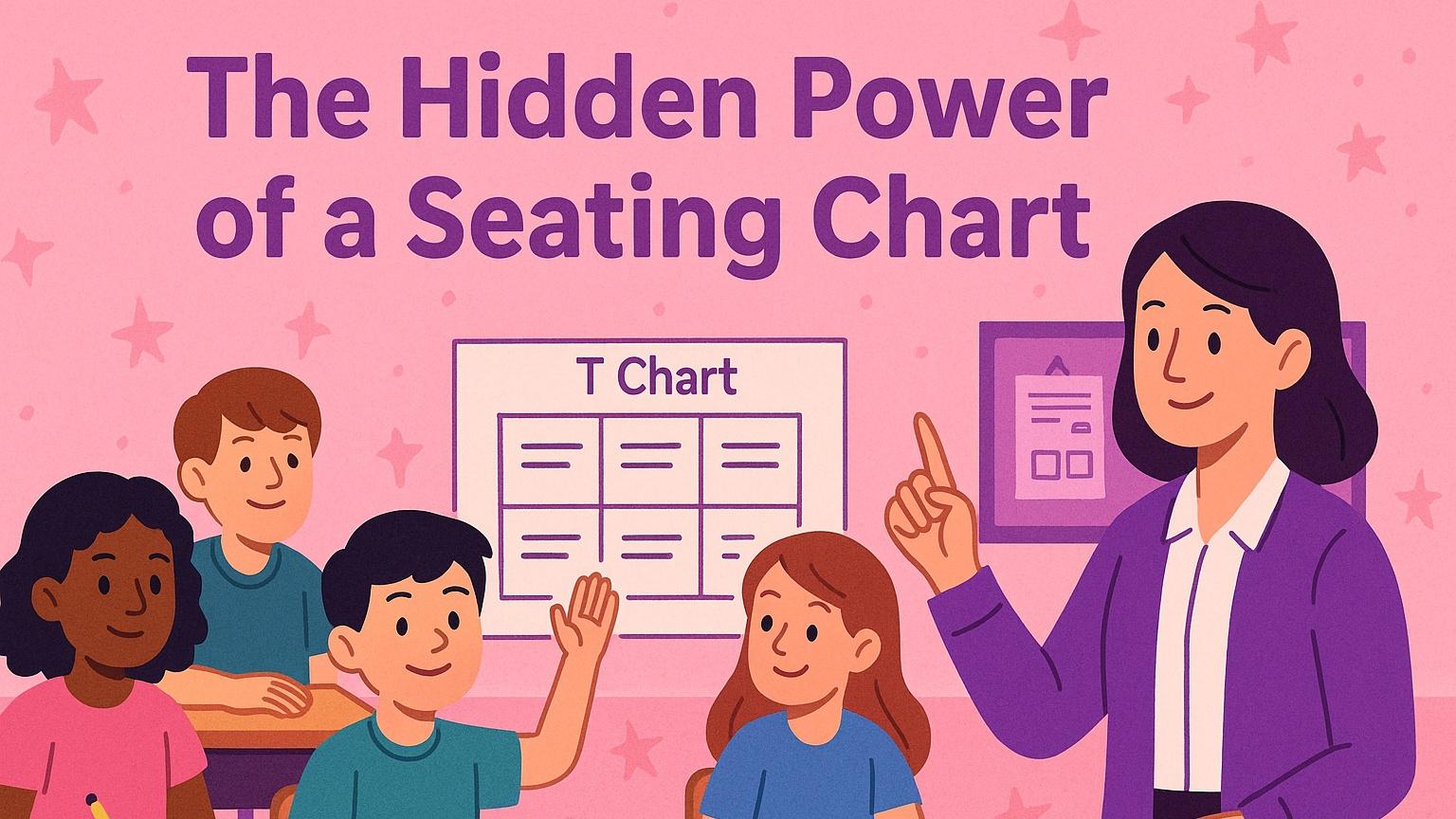
A well-designed seating chart is one of the most effective classroom tools you have — for behavior, for learning, and yes, even for improving test scores.
And the best part?
It’s something you can change as often as your students’ needs change.
Let’s break down why it matters — and how to build one that actually works.
First: Why Seating Charts Matter More Than People Think
If you’re teaching your first year, here’s what might surprise you:
Sometimes your classroom problems have nothing to do with your lesson plan.
They come from:
-
where a student is sitting
-
who they’re sitting near
-
whether they can see
-
whether you can reach them
-
how easily they can stay engaged
A seating chart prevents issues before they start — not by punishment, but by structure.
Instead of constantly saying:
“Pay attention!”
“Eyes on me!”
“Stop talking!”
You’ve already set the room up so students are:
✔ easier to support
✔ easier to monitor
✔ easier to engage
This isn’t controlling — it’s smart teaching.
A Strong Seating Chart Improves Behavior Through Proximity
Imagine two students who distract each other constantly.
If they sit together:
Your whole lesson becomes a tug-of-war.
If they're separated and in a place where you walk past often?
They engage more — and disrupt less.
Why?
Because proximity = accountability.
That means:
-
Your body language does the redirecting
-
You don’t have to call them out
-
You prevent escalation because you’re already there
That’s solid classroom management — silent, respectful, and low-stress.
A Good Seating Chart Also Directly Affects Academics
This is where a lot of new teachers get stuck.
They think:
“I taught it. They missed it. I guess I’ll reteach it.”
But where students sit changes how much access they have to learning in the first place.
Struggling students need:
-
to see your visuals clearly
-
to hear directions without distractions
-
to make eye contact with the speaker
-
to be in your circulation path
If they’re stuck in the back?
They’re already at a disadvantage — before you even start the lesson.
And the science backs it up:
Students seated in high-engagement areas score higher on tests, even when instruction doesn’t change.
That means:
Sometimes the best intervention is simply moving a desk.
Don’t Just Put Struggling Students in Front — Do This Instead
Yes, struggling learners should be closer to where you teach.
But here’s what NOT to do:
❌ Don’t line all your lowest kids across the front row
❌ Don’t build a “struggle cluster” in one corner
❌ Don’t isolate kids who need help
Instead:
Spread them out strategically so they’re:
✔ in high-support zones
✔ easy to check on
✔ surrounded by peers who model strong habits
✔ close enough for whisper support
Example:
-
One student front left
-
One student front right
-
One student mid row, center
-
One student in front of your teacher station
Now you can teach and scan.
Peers Matter — And You Can Use That to Their Advantage
A great seating chart lets you harness peer support.
When you pair (the right) students intentionally:
-
One becomes a quiet model
-
One becomes a natural tutor
-
They check each other’s work
-
They normalize effort
And yes — this works even in upper grades.
But here’s what’s key:
You’re pairing for learning, NOT babysitting.
The partnership should feel like:
“Hey, we both want to get this right.”
Not:
“You’re here to watch them.”
Use Data to Create Your Seating Chart — Not Guesswork
One of the biggest mistakes new teachers make:
They create a seating chart based on personality…
…but not performance.
If your seating chart doesn’t include academic thinking, it’s only doing half the job.
Look at:
-
recent test scores
-
exit tickets
-
small group notes
-
who didn’t master yesterday’s lesson
-
who still struggles with foundational skills
Then seat based on academic need, not alphabetical order.
This Used to Take Forever — Now It Doesn’t
Once upon a time, you had to:
-
draw a map
-
fill in names
-
erase
-
redraw
-
start again
-
rewrite it on a new copy
-
print it 5 times
And then your roster changed.
Now?
It can take under a minute — if you’re using the right tool.
How the EasyClass Seating Chart Tool Makes This 10x Easier
Inside EasyClass AI, the Seating Chart Tool was designed by teachers who get it.
You can:
✔ Drag and drop students into any desk layout
✔ Label who needs accommodations
✔ Group by reading level or benchmark data
✔ Place struggling students near the front
✔ Pair peer tutors intentionally
✔ Mark behavior/watch list students
✔ Save multiple versions (AM vs PM, test day vs regular day)
Even better?
You’ll soon be able to connect real student performance data:
-
benchmark scores
-
test results
-
TEKS mastery
-
IEP objectives
Meaning:
It’s not just a seating chart anymore.
It’s a living, instructional tool.
Final Thoughts: A Seating Chart Isn’t About Control — It’s About Access
You don’t make a seating chart because:
“Teachers are supposed to.”
You make one because:
Students learn better when the room is set up for their success.
A seating chart helps you:
-
manage behavior quietly
-
give targeted support
-
keep eyes on task
-
reduce distraction
-
move strategically
-
reteach more effectively
-
raise academic outcomes
All without:
-
expensive tools
-
new curriculum
-
hours of extra grading
Your classroom setup is part of your instruction.
And when it’s intentional?
Kids don’t just sit better.
They learn better.